
For moves under 500 miles, driving usually wins on cost. Above 1,000 miles, shipping a car cross country becomes competitive once you factor in fuel costs, lodging, food, wear and tear, and time off work. Above 1,500 miles, shipping often costs less than driving when you add everything up. Classic cars, luxury vehicles, and anyone shipping more than one car should ship regardless of distance.
Shipping a car cross country or driving it yourself. It sounds like a simple question. It rarely is.
Most people start by comparing the gas receipt to the shipping quote and call it done. That math misses at least half the real costs on both sides. This guide runs through every factor that actually determines which option saves you money and which one makes your life easier, so you can make the right call for your specific situation.
- Real cost comparison: shipping vs driving
- Hidden costs of driving most people miss
- The breakeven point by distance
- Which option wins by scenario
- Ship the car, fly yourself
- Cross country car shipping options
- What affects car shipping costs
- How to save money on cross country auto transport
- How to prepare your car for shipment
- Frequently asked questions
Real Cost Comparison: Shipping vs Driving Cross Country
Here is where most comparisons go wrong. They compare the car shipping quote against the gas receipt and nothing else. That ignores at least half of what driving actually costs.

| Cost Item | Driving (2,500 miles) | Shipping (open transport) |
|---|---|---|
| Fuel costs | $300 to $500 | $0 |
| Lodging (3 to 4 nights) | $400 to $600 | $0 |
| Food and snacks | $100 to $200 | $0 |
| Tolls and road fees | $50 to $200 | $0 |
| Vehicle depreciation | $500 to $600 | $0 |
| Wear and tear (tires, oil, brakes) | $100 to $300 | $0 |
| Time off work (3 to 5 days) | Significant | Minimal |
| Car shipping cost | $0 | $1,100 to $1,700 |
| Estimated total | $1,450 to $2,400+ | $1,100 to $1,700 |
At 2,500 miles, the numbers are closer than most people expect. Add the cost of a flight home or to your destination if you ship, and the gap closes further. Factor in that your car arrives with zero additional miles, no wear, and no risk of breakdown, and the shipping argument gets stronger still.
Hidden Costs of Driving Most People Miss
The fuel receipt is the visible cost. These are the ones that quietly eat into the savings:
- Vehicle depreciation. The IRS standard mileage rate for 2025 sits at around $0.21 per mile for depreciation alone. A 2,500-mile drive costs around $525 in depreciation before you fill the gas tank.
- Tire wear. Long highway drives accelerate tire wear. A set of tyres that last 50,000 miles loses meaningful tread on a 2,500-mile trip. That cost rarely appears in anyone’s driving estimate.
- Oil and fluids. A long cross country drive may push your car past its next oil change interval, especially if it was already due. Budget for it.
- Breakdown risk. One unplanned repair on the side of an interstate wipes out any savings over shipping instantly. Towing alone starts at $100 and goes up fast depending on location.
- Time off work. A coast-to-coast drive takes three to five days minimum for a solo driver. More if you stop. That time has a real dollar value that most people do not put into their calculation.
- Stress and fatigue. Heavy traffic, weather conditions, long stretches of nothing in the middle of the country. Driving cross country is not a road trip. It is a logistics problem with a deadline at the end.
- Pet and child logistics. Driving with pets or children multiplies every cost and every stress point on this list.
Before you decide, calculate your actual driving cost using the full IRS mileage rate of $0.67 per mile (which covers fuel, depreciation, maintenance, and insurance). Multiply that by your distance. Then compare it against multiple car shipping quotes. For many people the real numbers are much closer than the gas receipt suggests.
The Breakeven Point: At What Distance Does Shipping Win?
The honest answer is that it depends on your car, your fuel economy, and how you value your time. But here is a general guide based on typical costs:
| Distance | Typical Verdict | Why |
|---|---|---|
| Under 500 miles | Drive wins | One-day drive, minimal lodging, shipping minimum fees make it uncompetitive |
| 500 to 1,000 miles | Depends on situation | One to two nights lodging, two days of driving. Shipping quote starts to compete |
| 1,000 to 1,500 miles | Shipping competitive | Full cost of driving with hidden costs often matches or exceeds mid-range shipping quotes |
| 1,500 to 2,500 miles | Shipping often wins | Three to four nights lodging, significant wear and depreciation, shipping cost per mile drops |
| 2,500+ miles (coast to coast) | Ship the car | Driving costs almost always exceed or match cross country car shipping when all costs are included |
Which Option Wins by Scenario
Distance is only one factor. Here is how the decision plays out across the situations that come up most often.
Ship the car. A cross country drive with children or pets turns every hotel stop, every rest break, and every fuel stop into a major logistical event. Shipping the car and flying takes hours instead of days.
Ship the car, enclosed transport. Adding 2,500 miles to a classic car or luxury vehicle reduces its value. Enclosed shipping eliminates all road risk and keeps every mile off the odometer.
Ship both. If you have multiple cars, shipping both on the same quote often costs less per vehicle than driving one and shipping the other. Multi-vehicle discounts apply and the logistics simplify considerably.
Drive. If cost is the primary concern and the distance is manageable in one to two days, driving wins. Stay with friends or family along the route and fuel costs stay low.
Ship the car. An older vehicle with high mileage carries real breakdown risk on a long drive. The cost of one roadside breakdown can exceed the shipping quote.
Ship the car. You cannot drive a car to someone else without flying back. Once you add the return flight, shipping is almost always the cheaper and more practical option.
Ship the Car, Fly Yourself
This is the option that comes up constantly in real moving conversations and almost never gets mentioned in formal guides. Ship the car with ShipYourCarNow, book a flight, and arrive at your destination in a few hours instead of several days.
The math often works out in its favour:
- • Open transport cross country: $1,100 to $1,700
- • Domestic flight: $150 to $400 depending on route and timing
- • Total: $1,250 to $2,100
Compare that to driving costs of $1,450 to $2,400 plus three to five days off work, and the ship-and-fly approach often comes out ahead financially while saving days of your life.
For families with children, for anyone who cannot take time off work, or for anyone moving to a tight deadline, it is frequently the only option that actually makes sense.
“We treat every car that we ship as if it was our own personal vehicle. Leave the shipping and transport to the experts so you can focus on what actually matters during a move.”

Cross Country Car Shipping Options
Open Transport vs Enclosed Shipping
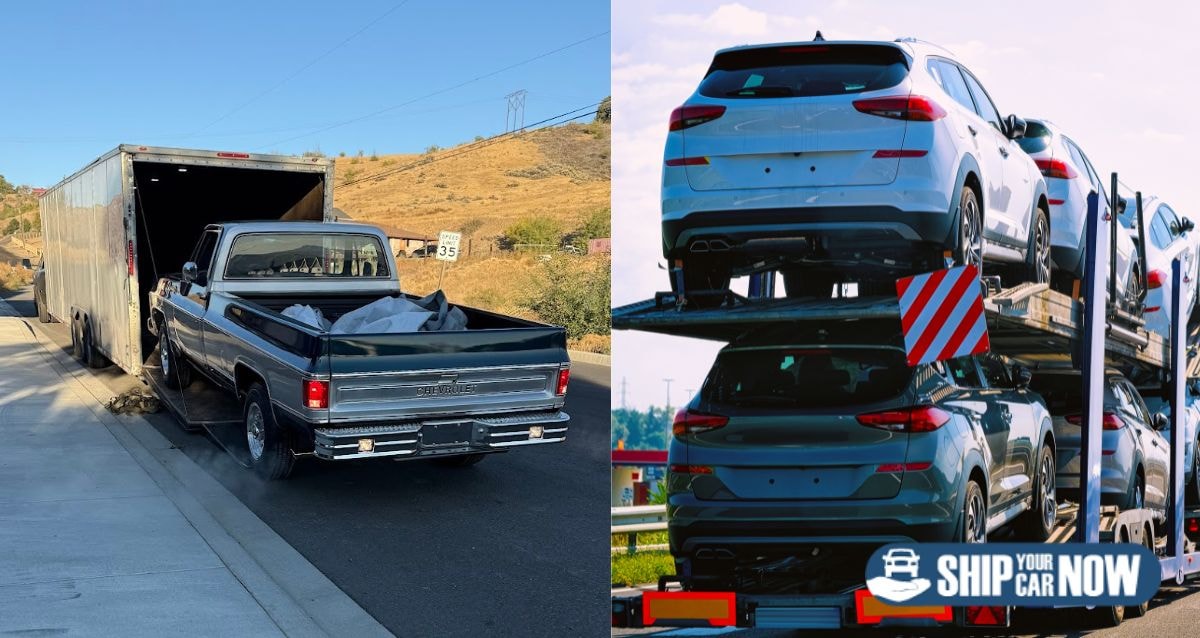
- • Most common cross country auto transport method
- • Car ships on an open carrier alongside other vehicles
- • Exposed to weather conditions and road debris
- • Suitable for most standard cars and daily drivers
- • Shorter delivery window than enclosed options
- • Cross country cost typically $1,100 to $1,700
- • Vehicle travels inside a covered enclosed carrier
- • Complete protection from weather, debris, and visibility
- • Preferred choice for classic cars and luxury vehicles
- • Higher shipping costs, typically 30 to 60% above open transport
- • Fewer carriers available, slightly longer delivery dates
- • Worth the additional cost for any high-value vehicle

Door to Door vs Terminal to Terminal
- Door to door delivery picks the car up from your location and delivers it to your destination address. The most convenient option. Slightly higher cost but removes all additional travel on your end.
- Terminal to terminal shipping requires you to drop the car at a carrier terminal and collect it at a terminal near the destination. Lower cost, but adds logistics at both ends of the journey.
For most cross country moves, door to door is worth the additional cost. It removes two extra trips you would otherwise need to make during an already stressful move.
What Affects Cross Country Car Shipping Costs
Several factors move the price of cross country vehicle shipping up or down. Understanding them helps you compare prices accurately and spot a fair price versus an inflated one.
- Distance. The primary factor. Longer routes cost more overall but less per mile. Coast to coast shipping is generally more cost effective per mile than regional routes.
- Transport type. Open transport costs significantly less than enclosed shipping. If the vehicle does not require special protection, open transport is the cheapest way to ship a car long distance.
- Vehicle size and weight. Larger vehicles take more space and add weight to the carrier. SUVs, trucks, and vans cost more to ship than standard sedans.
- Vehicle condition. A non-running vehicle requires special loading equipment and costs more to transport. Make sure the car starts and drives before the pickup date wherever possible.
- Fuel prices. Rising fuel prices directly affect what carriers charge. This fluctuates throughout the year and is reflected in real-time quotes.
- Delivery locations. Door to door delivery to a major city costs less than delivery to a rural area. Hard-to-reach delivery locations require detours that increase the cost.
- Pickup date and delivery window flexibility. Flexible pick up dates allow carriers to optimise their routes and often result in lower quotes. A tight delivery window or expedited service adds cost.
- Season and demand. Summer and early autumn are peak seasons for cross country moves. Shipping costs rise with demand. September through November tend to be cheaper months to ship a car.
- Personal items. Most car shippers allow up to 100 pounds of personal belongings in the trunk at no extra charge. Excess weight beyond that may increase the quote. See the full guide on shipping personal items in your car.
How to Save Money on Cross Country Auto Transport
- • Get multiple car shipping quotes from at least three companies and compare them directly
- • Book early, as last-minute bookings carry a premium, especially during peak season
- • Be flexible on your pick up date and delivery window to qualify for lower rates
- • Choose open transport unless your vehicle genuinely requires enclosed shipping
- • Ask about military, student, senior, and multi-vehicle discounts
- • Ship during off-peak months. September through November tend to have lower demand and better availability
- • Choose door to door delivery to avoid paying for additional transport to and from terminals
- • Reduce the gas tank to a quarter full before pickup, as a full tank adds unnecessary weight
- • Use a reputable transport company directly rather than a third-party marketplace that adds fees without adding service
Some car shipping companies advertise a low base rate and add fees at pickup. A fair price quote from a reputable transport company includes everything upfront. Ask specifically about fuel surcharges, insurance, and delivery location fees before you confirm. ShipYourCarNow locks in the quoted price. The price quoted is the price charged.
How to Prepare Your Car for Shipment
A well-prepared vehicle moves through the pickup process faster and reduces the chance of any issues at delivery. Here is what to do before the carrier arrives.
- ✓ Wash the exterior so existing damage shows clearly during the inspection
- ✓ Photograph the vehicle from all angles, including the interior and odometer
- ✓ Remove all personal belongings except what fits within the 100-pound limit in the trunk
- ✓ Leave the gas tank at a quarter full or less
- ✓ Check tyre pressure, fluid levels, and battery charge
- ✓ Disable any aftermarket alarms that could drain the battery
- ✓ Remove bike racks, roof boxes, and any external attachments
- ✓ Retract the antenna if it extends manually
- ✓ Note any existing damage and ensure the driver acknowledges it on the bill of lading
- ✓ Keep a spare key available for the carrier
Vehicle Insurance During Transport
All car shippers are required to carry cargo insurance. That covers damage to the vehicle during transport. Before handing over the keys:
- • Request a copy of the carrier’s insurance certificate
- • Ask about deductibles and the claims process
- • Check whether your own auto insurance provides any additional coverage during transport
- • For a classic car or luxury vehicle, ask about supplemental coverage options
For more detail on how insurance works during auto transport, the auto transport insurance guide covers everything you need to know before you sign anything.
For the full breakdown of what drives car shipping costs, the car shipping costs guide covers every pricing factor in detail. To understand exactly how the process works from quote to delivery, the ShipYourCarNow shipping process page walks through every step. And if you want to see how shipping compares to other transport options for specific routes, the guide to budget car shipping is worth reading before you commit.
Ready to Get a Cross Country Car Shipping Quote?
ShipYourCarNow moves vehicles across all 50 states with door-to-door service, locked-in pricing, and 24/7 support. Get your instant quote in under 20 seconds and see what shipping actually costs compared to driving.
Frequently Asked Questions
At distances over 1,500 miles, shipping is often cheaper than driving when you include fuel costs, lodging, food, tolls, vehicle depreciation, and wear and tear. At under 500 miles, driving typically wins. Between 500 and 1,500 miles it depends on your specific situation, your car’s fuel economy, and how you value your time.
Open transport cross country typically runs $1,100 to $1,700 depending on distance, vehicle size, delivery locations, and time of year. Enclosed shipping costs 30 to 60% more. Short distance shipping under 500 miles starts around $500 to $800. Get multiple car shipping quotes to compare prices accurately.
Open transport with a flexible pick up date and a flexible delivery window gives you the lowest possible quote. Booking during off-peak months (September through November), being flexible on delivery dates, and using door to door delivery to avoid additional transport costs all help reduce the total price.
Coast to coast open transport typically takes seven to ten days from pickup to delivery. Shorter routes take less time. Enclosed shipping may take slightly longer due to fewer available carriers. Expedited service is available at a higher cost if you need the vehicle to arrive by a specific date.
Most car shipping companies allow up to 100 pounds of personal belongings stored in the trunk or below the window line at no extra charge. Items are not covered by the carrier’s vehicle insurance. Anything above 100 pounds may incur additional costs. The full details are covered in the guide to shipping personal items in your car.
Distance is the biggest factor. Transport type (open vs enclosed), vehicle size and condition, delivery locations, fuel prices, the pick up date, and seasonal demand all affect the final quote. A flexible delivery window and off-peak booking produce the lowest rates.
Open transport suits most standard vehicles and daily drivers. It costs significantly less and is available on more routes with shorter delivery windows. Enclosed shipping is the right choice for classic cars, luxury vehicles, or any car whose condition and value you cannot afford to risk. The additional cost is worth it when the vehicle matters.
Someone needs to be present at both ends of the shipment to sign the bill of lading and inspect the vehicle. That does not have to be you personally. A trusted person at the pickup or delivery location can handle it on your behalf as long as they can inspect the vehicle and sign the documentation.
Look for verified customer reviews, clear upfront pricing with no hidden fees, proper insurance documentation, and a direct point of contact throughout the entire process. Avoid companies that require a large deposit before a carrier is assigned. ShipYourCarNow only charges once a carrier is dispatched to your order, locks in the quoted price, and provides 24/7 support throughout the shipment.
Shipping a car cross country comes down to one calculation: what does driving actually cost when you add everything up, and how does that compare to what a reputable transport company quotes you for the same journey. Get the numbers, compare them honestly, and the right answer usually makes itself clear.




Senior automotive logistics professional with a passion for the industry and a 10+ year history of accomplishments. Proven track record of exemplary client management working with both RMCs, Van Lines and OEMs. Keen ability to react to an ever-changing marketplace while offering superior technology solutions, programs and services. Architect of award winning auto transport portal technology offering transparency and agility to clients, agents and transferees. Successful team builder and leader easily managing budgets with effective leadership, strategic planning, and problem-solving capabilities.